CASE STUDY
CASE STUDY
Designing an Integrated Fintech Platform
Designing an Integrated Fintech Platform
PROJECT OVERVIEW
PROJECT OVERVIEW
OneAndro brought together diverse user types and constantly shifting data flows.
The challenge: build clarity across a complex ecosystem, transforming every workflow into something users felt confident navigating.
OneAndro brought together diverse user types and constantly shifting data flows.
The challenge: build clarity across a complex ecosystem, transforming every workflow into something users felt confident navigating.
Timeline
8 months
Role
Co-creator (Team of 5)
Target Users
Financial Agents
Platform
Mobile, Web
Tool
Adobe XD, Miro, draw.io
INTRODUCTION
INTRODUCTION
OneAndro is a fintech platform that empower agents to sell financial products like loans, credit cards, insurance, and more. Built to simplify how financial products reach customers. It empowers agents, operators, and admins to collaborate - from lead capture to KYC verification, approval, and payout
OneAndro is a fintech platform that empower agents to sell financial products like loans, credit cards, insurance, and more. Built to simplify how financial products reach customers. It empowers agents, operators, and admins to collaborate - from lead capture to KYC verification, approval, and payout
THE BEGINNING: UNDERSTANDING THE CHAOS
THE BEGINNING: UNDERSTANDING THE CHAOS
When I joined the project, the goal was simple yet vast: to design a scalable platform that could manage multiple user interactions within a single system.
When I joined the project, the goal was simple yet vast: to design a scalable platform that could manage multiple user interactions within a single system.
It took time to untangle how data moved and who triggered what. Together with the project manager, we began decoding this structure — piece by piece — until patterns started emerging. That was the first turning point: realizing clarity could be designed.
It took time to untangle how data moved and who triggered what. Together with the project manager, we began decoding this structure — piece by piece — until patterns started emerging. That was the first turning point: realizing clarity could be designed.
MY ROLE
MY ROLE
I owned the product design process from discovery to functional wireframes. My work centered around making the system understandable - not just for users, but for everyone involved.
I owned the product design process from discovery to functional wireframes. My work centered around making the system understandable - not just for users, but for everyone involved.
Translated business logic into clear user flows
Research
Research
Mapped how data travels between users
Flow Map
Flow Map
Created functional wireframes for stakeholder validation
Wireframes
Wireframes
Conducted stakeholder walkthroughs to align product, design, and tech
Walkthrough
Walkthrough
Supported the final transition from wireframes to UI
Collaboration
Collaboration
THE CHALLENGE
THE CHALLENGE
It wasn’t just about designing screens - it was about making sense of how information should move across different roles, and how each decision impacts another user.
It wasn’t just about designing screens - it was about making sense of how information should move across different roles, and how each decision impacts another user.
THE PROCESS
THE PROCESS
Discovery
Discovery
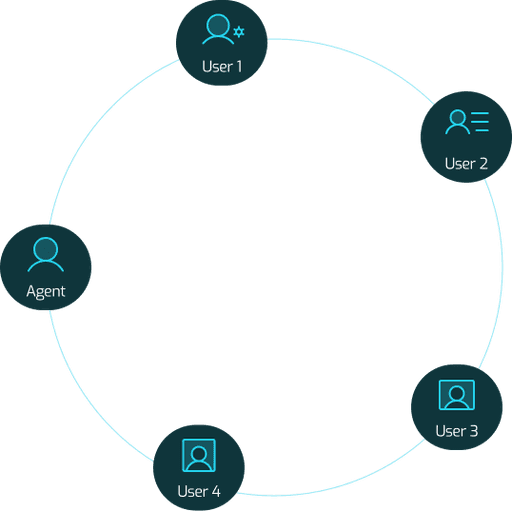
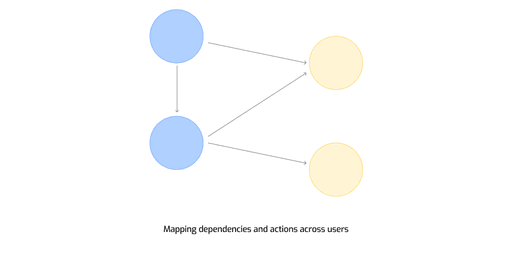
The project began with understanding the ecosystem shared by stakeholders - a dense flow diagram detailing how different user roles interacted. I analyzed these dependencies and mapped them into clearer relationships to identify how information moved and what actions triggered responses.
The project began with understanding the ecosystem shared by stakeholders - a dense flow diagram detailing how different user roles interacted. I analyzed these dependencies and mapped them into clearer relationships to identify how information moved and what actions triggered responses.
These insights became the foundation for designing a cohesive system where every task connects logically to the next.
These insights became the foundation for designing a cohesive system where every task connects logically to the next.
Why this mattered:
Complexity often arises from unclear relationships between users, data, and actions. Defining these early ensured the design remained scalable, traceable, and aligned with real workflows.
Why this mattered:
Complexity often arises from unclear relationships between users, data, and actions. Defining these early ensured the design remained scalable, traceable, and aligned with real workflows.
WIREFRAMING
WIREFRAMING
Once the system architecture became clear, I started creating functional wireframes to bring structure and clarity to each workflow. The focus was on task hierarchy, logical grouping, and smooth navigation between actions.
Each wireframe walkthrough with stakeholders acted as a validation checkpoint. We iterated together to refine unclear steps, align business rules, and eliminate redundant approvals. The final structure offered a clear path for every user type - intuitive enough for first-time users, yet robust for experienced ones.
Why these decisions:
Functional wireframes allowed everyone to visualize complex logic in an actionable way. Clickable wireframes helped align business expectations and reduce misunderstandings early.
Once the system architecture became clear, I started creating functional wireframes to bring structure and clarity to each workflow. The focus was on task hierarchy, logical grouping, and smooth navigation between actions.
Each wireframe walkthrough with stakeholders acted as a validation checkpoint. We iterated together to refine unclear steps, align business rules, and eliminate redundant approvals. The final structure offered a clear path for every user type - intuitive enough for first-time users, yet robust for experienced ones.
Why these decisions:
Functional wireframes allowed everyone to visualize complex logic in an actionable way. Clickable wireframes helped align business expectations and reduce misunderstandings early.
SOME WIREFRAME SOLUTIONS
SOME WIREFRAME SOLUTIONS
Initial Onboarding
We focused on reducing cognitive load during first-time setup. Using progressive disclosure, agents only see what’s essential at each step.
Initial Onboarding
We focused on reducing cognitive load during first-time setup. Using progressive disclosure, agents only see what’s essential at each step.
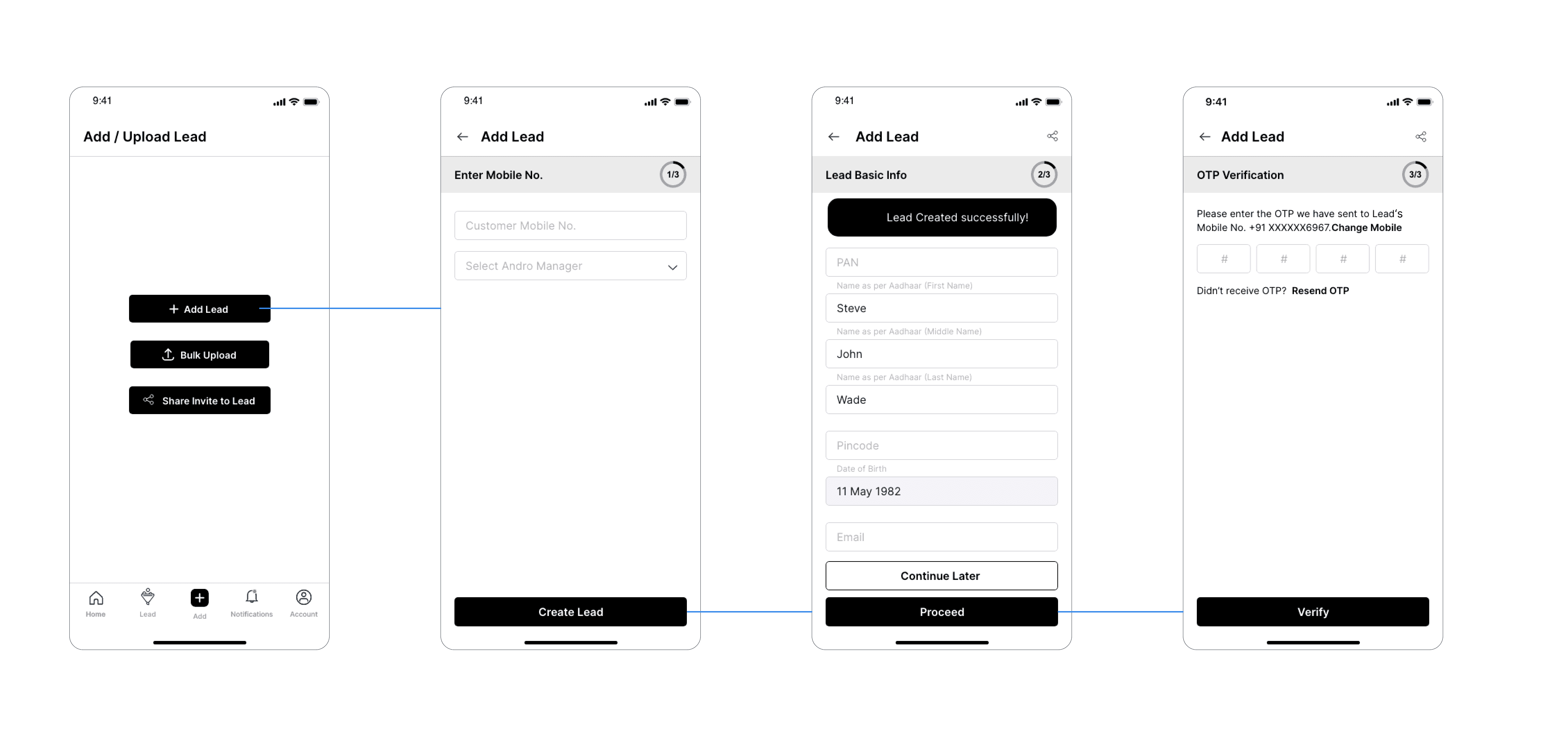
Add Lead Flow
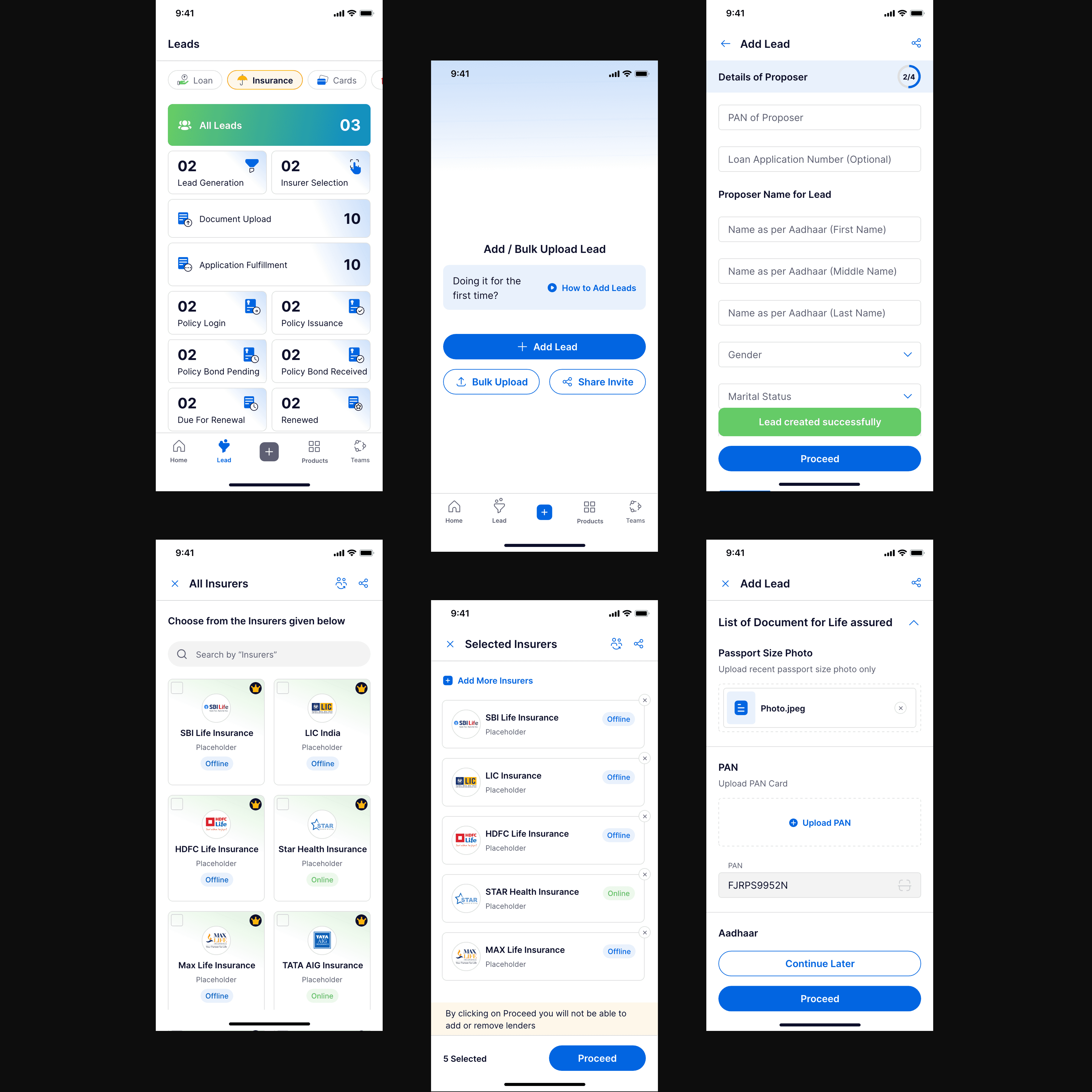
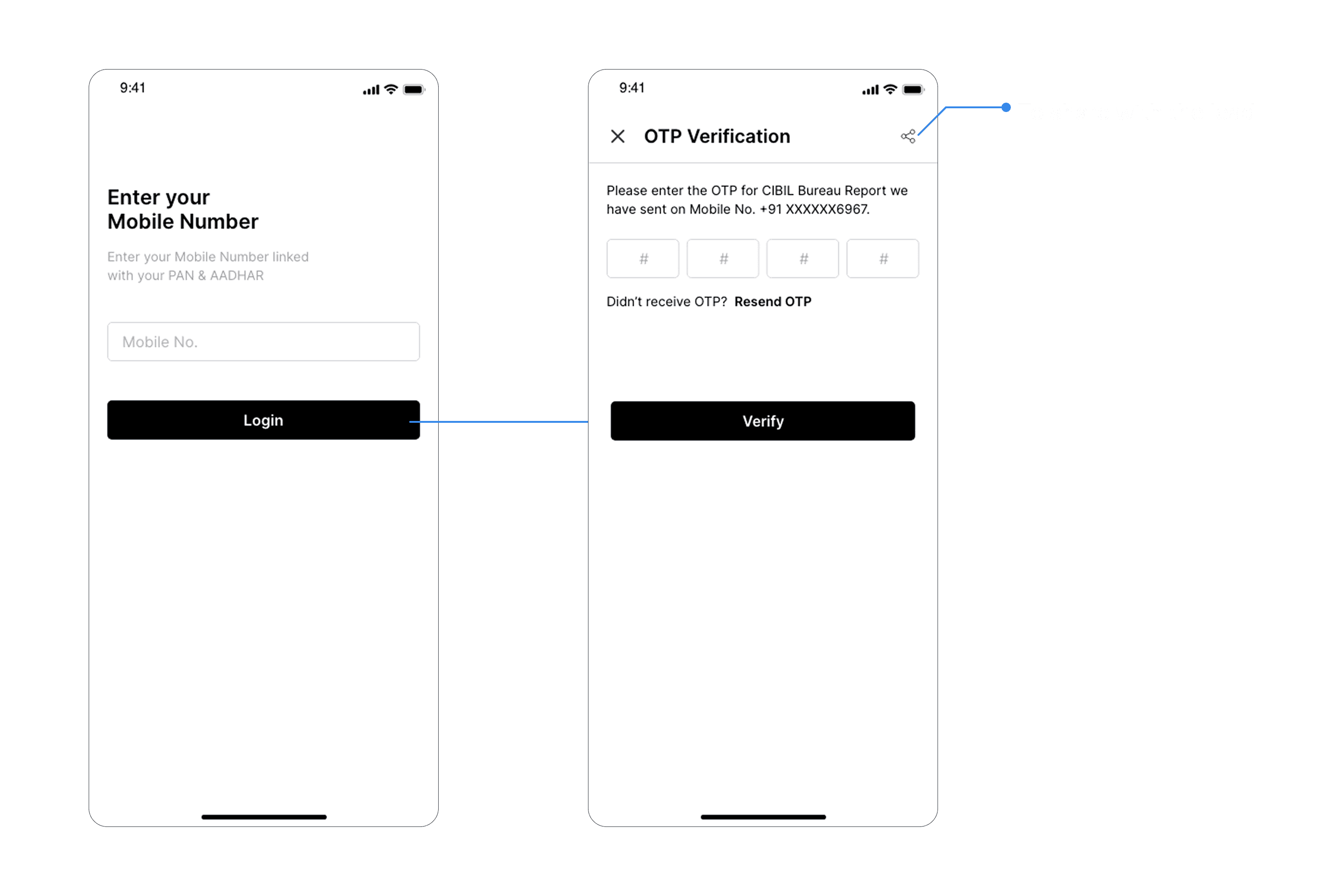
Designed a quick, 3-step process to help agents add leads easily. Used progressive disclosure to reduce input effort and OTP verification to ensure data accuracy. Helped in reduction in invalid leads through early mobile validation.
Add Lead Flow
Designed a quick, 3-step process to help agents add leads easily. Used progressive disclosure to reduce input effort and OTP verification to ensure data accuracy. Helped in reduction in invalid leads through early mobile validation.
Easy KYC Process
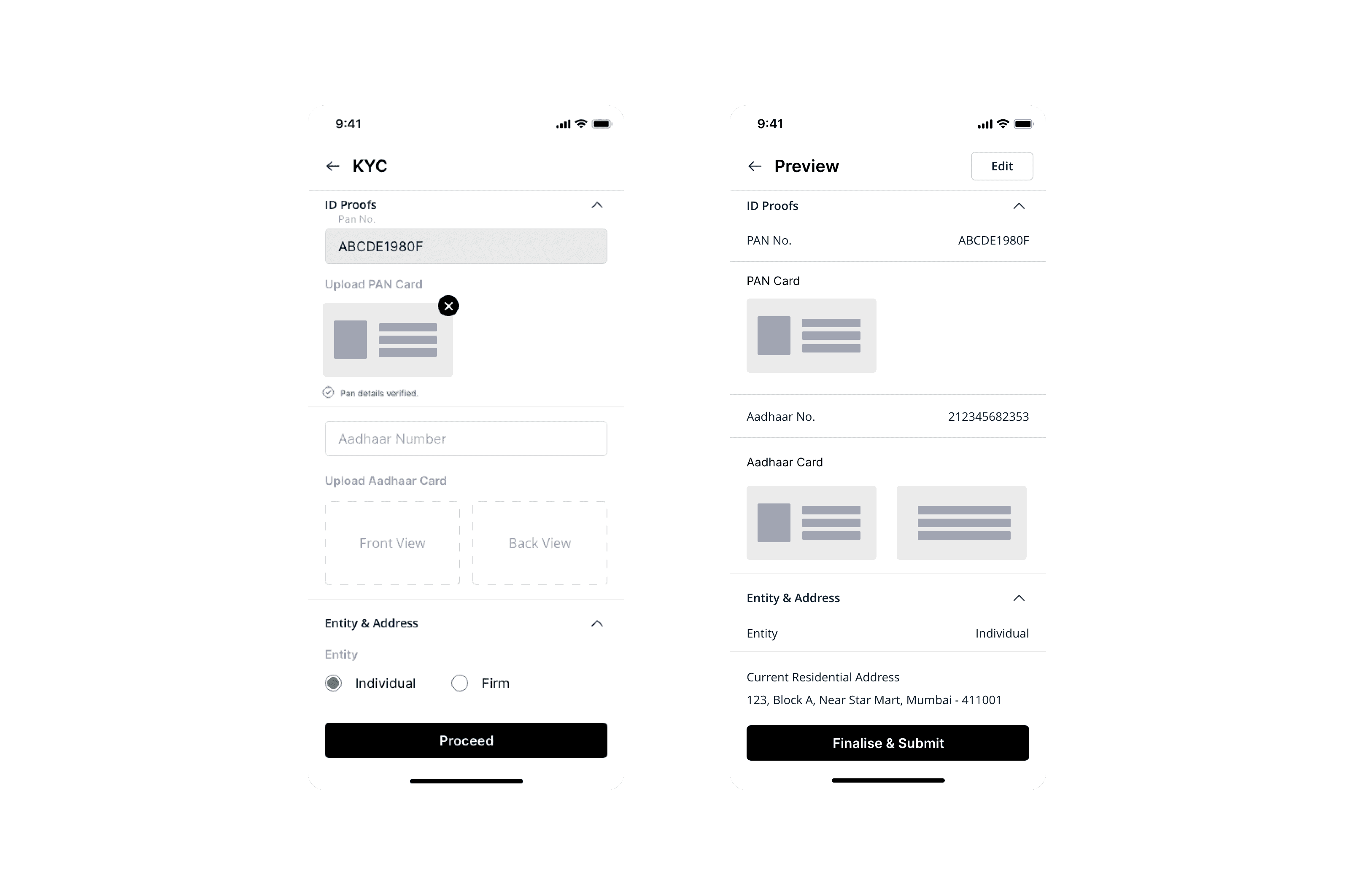
Reimagined KYC as a transparent, self-guided flow. Real-time validation, document previews, and progress tracking built user trust. Designed to reduce failed submissions and increase completion rates with clear feedback loops.
Easy KYC Process
Reimagined KYC as a transparent, self-guided flow. Real-time validation, document previews, and progress tracking built user trust. Designed to reduce failed submissions and increase completion rates with clear feedback loops.
Lead Dashboard & Details
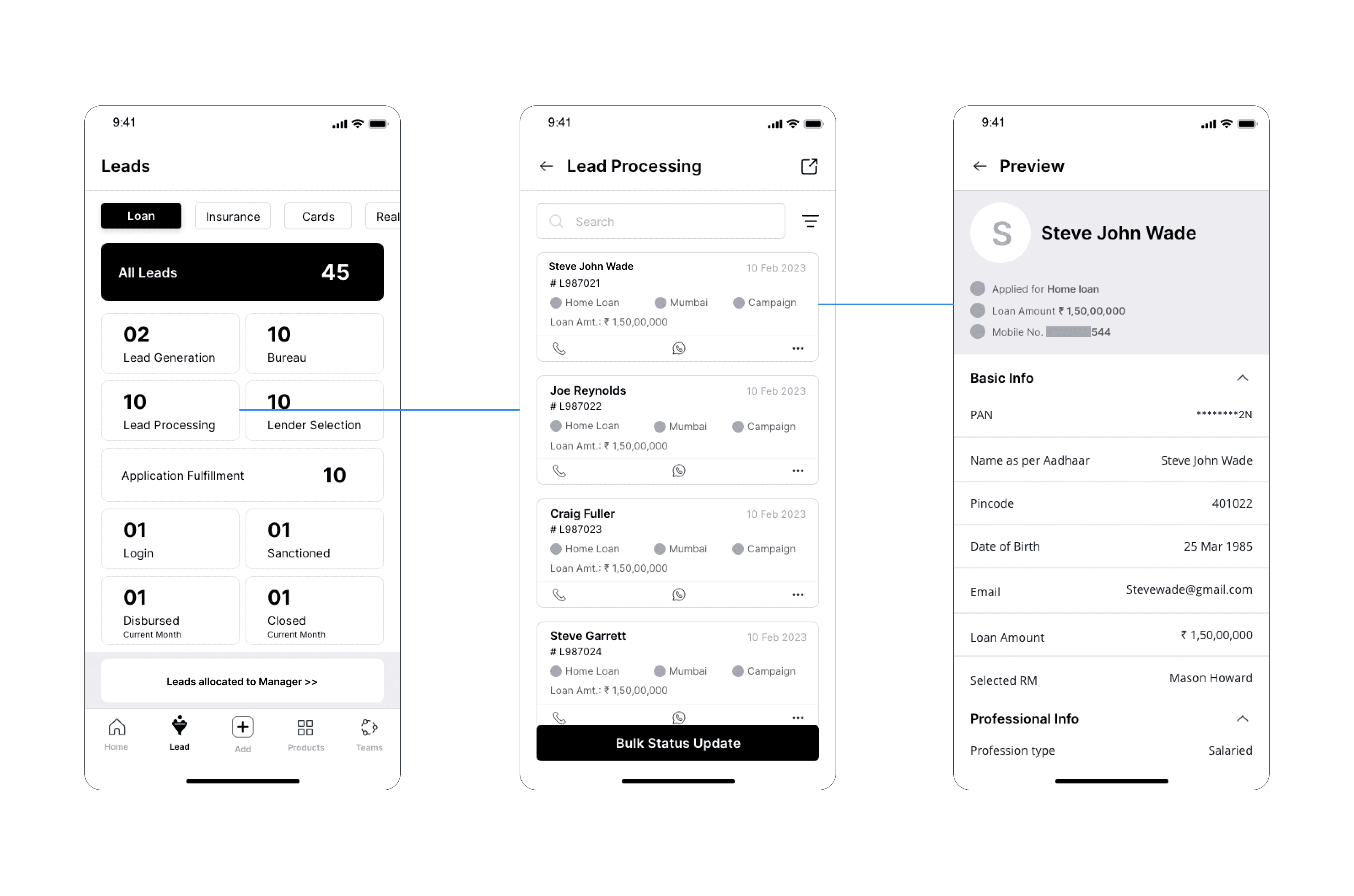
Dashboard that gives agents a clear snapshot of their entire pipeline - categorized by different stages.
Lead Dashboard & Details
Dashboard that gives agents a clear snapshot of their entire pipeline - categorized by different stages.
Language Localization
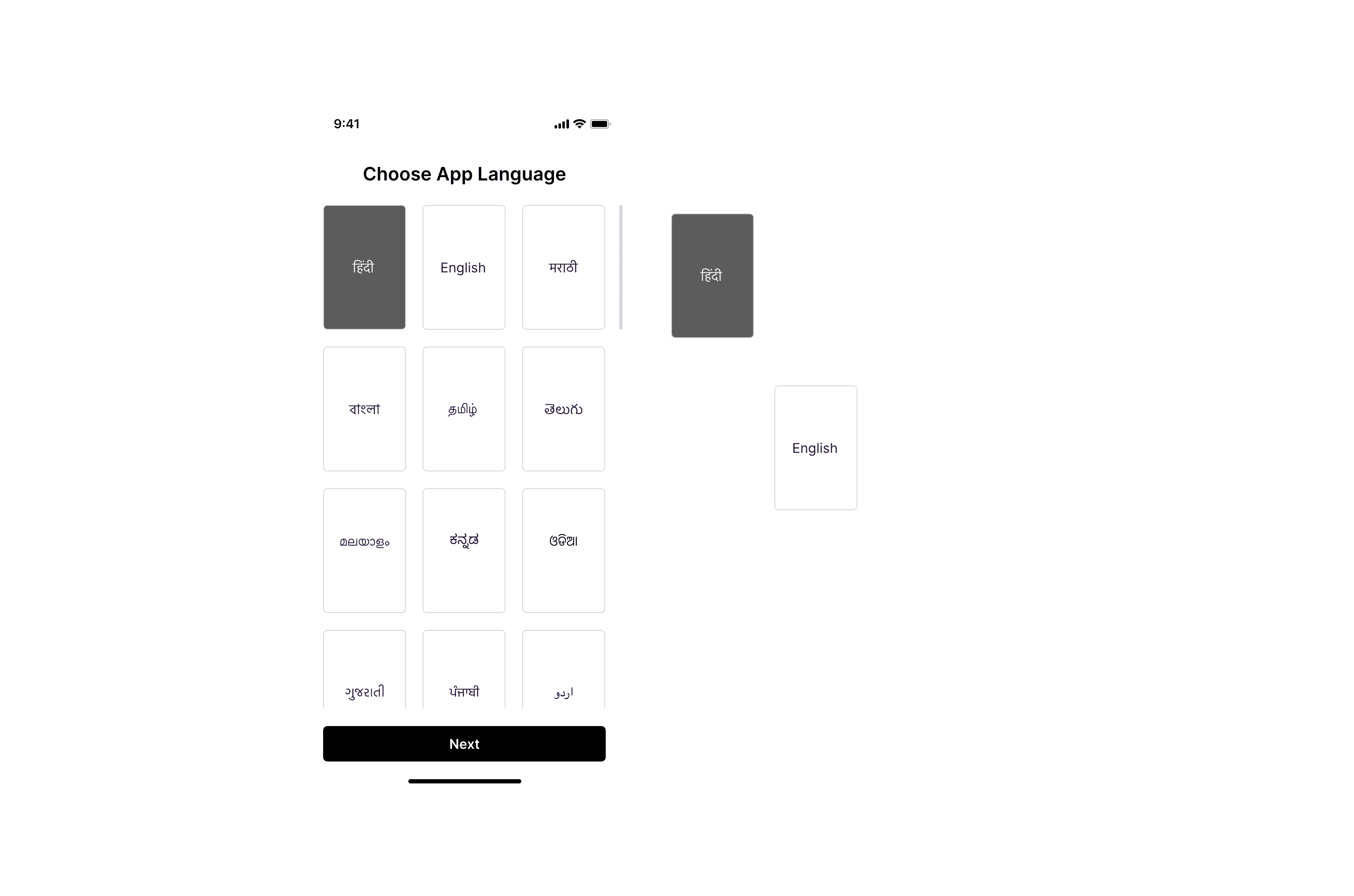
To ensure inclusivity, the design supports regional adaptability. Expected to improve adoption in tier-2/3 cities by addressing language and accessibility barriers.
Language Localization
To ensure inclusivity, the design supports regional adaptability. Expected to improve adoption in tier-2/3 cities by addressing language and accessibility barriers.
DESIGN REFINEMENT
DESIGN REFINEMENT
This phase involved defining reusable patterns for similar actions and ensuring color, typography, and layout communicated clarity rather than complexity. The result was a unified experience that scaled easily as the system evolved.
Why these decisions:
Design consistency reduces cognitive load in enterprise products. A predictable, logical interface encourages confidence among users who manage complex data daily.
This phase involved defining reusable patterns for similar actions and ensuring color, typography, and layout communicated clarity rather than complexity. The result was a unified experience that scaled easily as the system evolved.
Why these decisions:
Design consistency reduces cognitive load in enterprise products. A predictable, logical interface encourages confidence among users who manage complex data daily.
OUTCOME
OUTCOME
Faster Lead Acquisition
A streamlined interface and improved search functionality enable financial agents to quickly identify and acquire qualified leads, reducing turnaround time for new customers.
Enhanced Lead Management
Efficient tools for filtering, prioritizing, and tracking leads help agents manage their pipeline with greater clarity and speed, improving daily productivity.
Reduced Manual Work
Automation of repetitive tasks — such as data entry, document uploads, and status updates — has minimized manual effort, allowing financial agents to focus on relationship-building and closing deals.
Check the live product here
Check the live product here
CONTACT
Reach out to me if you have new opportunities or design-related discussions.
Reach out to me if you have new opportunities or design-related discussions.
megha.digrase@gmail.com
Copied
megha.digrase@gmail.com
Copied
megha.digrase@gmail.com
Copied