CASE STUDY
CASE STUDY
Enhancing Payment Flow in UPI Wallets:
Adding the Last-Minute Purchase Amount
Enhancing Payment Flow in UPI Wallets:
Adding the Last-Minute Purchase Amount
INTRODUCTION
INTRODUCTION
A concept design feature within Digital Wallet for adding the cost of a product bought at the last minute.
A concept design feature within Digital Wallet for adding the cost of a product bought at the last minute.
OVERVIEW
OVERVIEW
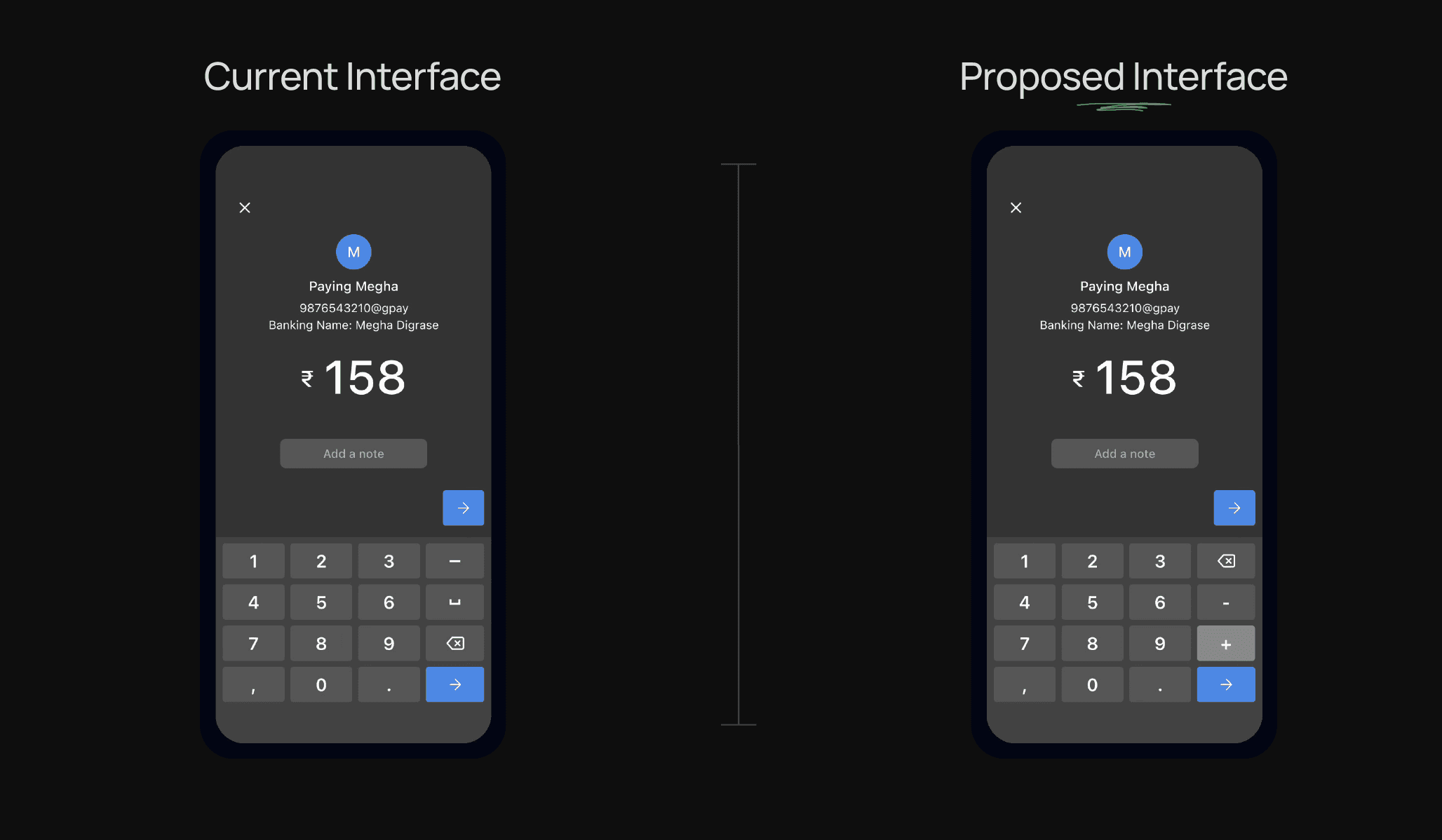
While using a UPI wallet to make in-store payments, I observed a recurring pain point: when customers add an additional product at the last minute, they need to re-enter the entire payment amount. This small friction creates cognitive load and disrupts the checkout flow.
While using a UPI wallet to make in-store payments, I observed a recurring pain point: when customers add an additional product at the last minute, they need to re-enter the entire payment amount. This small friction creates cognitive load and disrupts the checkout flow.
This concept aims to streamline the experience by allowing users to add the payment amount directly inside the UPI interface, making digital transactions faster, more human, and closer to how we naturally handle money in real life. Just like handing over exact cash on the spot, users can enter the amount right when they need it, without breaking their flow.
This concept aims to streamline the experience by allowing users to add the payment amount directly inside the UPI interface, making digital transactions faster, more human, and closer to how we naturally handle money in real life. Just like handing over exact cash on the spot, users can enter the amount right when they need it, without breaking their flow.
PROBLEM
PROBLEM
Today’s UPI payment flow assumes that the total amount to be paid is known upfront. However, in real purchase scenarios - especially in grocery stores, pharmacies, and local shops - the total amount often changes at the last moment.
Today’s UPI payment flow assumes that the total amount to be paid is known upfront. However, in real purchase scenarios - especially in grocery stores, pharmacies, and local shops - the total amount often changes at the last moment.
OBSERVED ISSUES
OBSERVED ISSUES
Users have to delete and re-enter the entire amount after adding one more item.
Merchants need to re-calculate total manually.
Increased waiting time for others in the queue.
Friction in an otherwise fast and seamless payment journey.
Users have to delete and re-enter the entire amount after adding one more item.
Merchants need to re-calculate total manually.
Increased waiting time for others in the queue.
Friction in an otherwise fast and seamless payment journey.
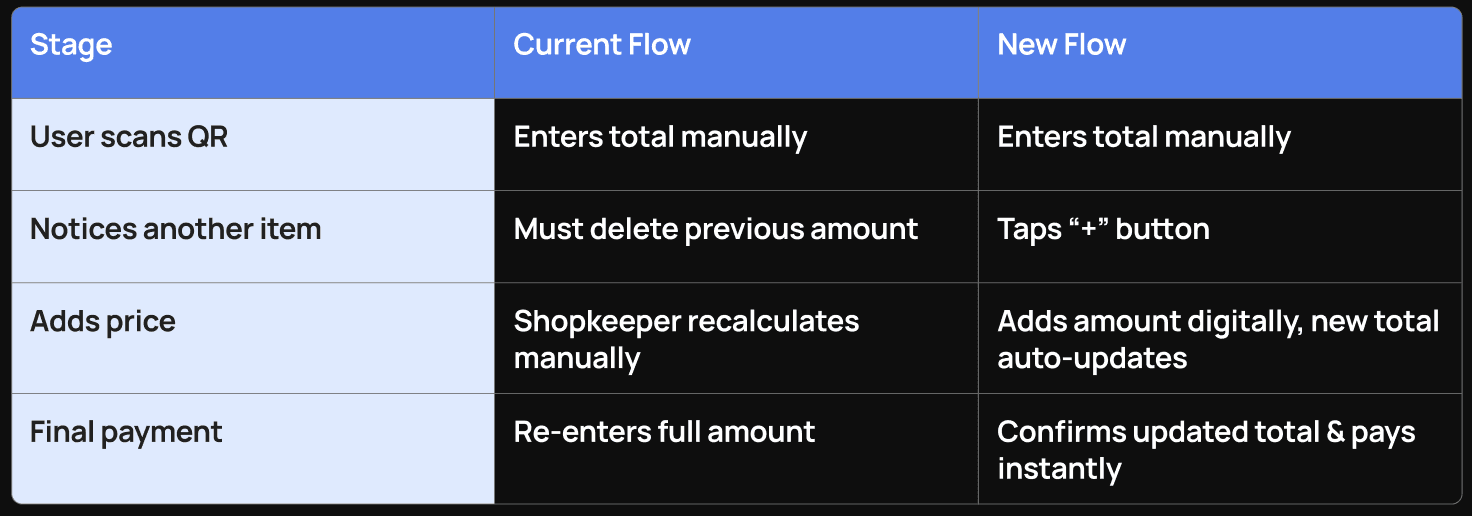
USER JOURNEY (BEFORE VS. AFTER)
USER JOURNEY (BEFORE VS. AFTER)
TRIGGER MOMENT
TRIGGER MOMENT
This idea originated from a personal incident. I had already entered an amount into my UPI app and was about to pay when I picked up one more product. I had to delete the entered value, wait for the merchant to calculate the new total, and re-enter the amount manually. I noticed similar behavior among other customers in multiple shops.
This idea originated from a personal incident. I had already entered an amount into my UPI app and was about to pay when I picked up one more product. I had to delete the entered value, wait for the merchant to calculate the new total, and re-enter the amount manually. I noticed similar behavior among other customers in multiple shops.
This made me wonder:
This made me wonder:
“Why can’t I just add ₹15 more directly instead of starting over?”
“Why can’t I just add ₹15 more directly instead of starting over?”
PROPOSED SOLUTION
PROPOSED SOLUTION
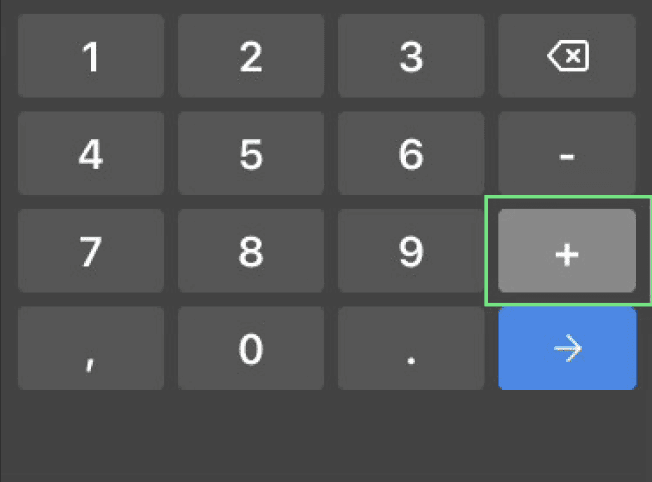
A "+" button inside digital wallet interface itself.
A "+" button inside digital wallet interface itself.
IMPACT
IMPACT
If implemented, this feature can:
Save 5–10 seconds per new item transaction.
Make UPI experience more human-centered for real-world use cases improving user experience for millions of users.
Reduced transaction friction for users and merchants.
Improved trust and confidence through visible arithmetic transparency.
Closer alignment between digital and physical payment behaviors.
If implemented, this feature can:
Save 5–10 seconds per new item transaction.
Make UPI experience more human-centered for real-world use cases improving user experience for millions of users.
Reduced transaction friction for users and merchants.
Improved trust and confidence through visible arithmetic transparency.
Closer alignment between digital and physical payment behaviors.
CONSTRAINTS & CONSIDERATIONS
CONSTRAINTS & CONSIDERATIONS
Despite its usefulness, this feature may not exist yet in leading UPI apps due to:
UPI regulation
Security & compliance
Design simplicity: Adding more elements to the payment screen could distract from the core goal of confirming payment.
Despite its usefulness, this feature may not exist yet in leading UPI apps due to:
UPI regulation
Security & compliance
Design simplicity: Adding more elements to the payment screen could distract from the core goal of confirming payment.
NEXT STEPS
NEXT STEPS
Validate with merchants: Conduct interviews and field tests with local shop owners to understand how often totals change and their comfort with user-side adjustments.
System integration: Explore how this could fit into current payment architecture.
Implementation options:
Introduce an ‘Add’ button by default for everyone.
Or allow users to enable it manually in settings (optional convenience).
Future scope: Extend the feature to support basic arithmetic operations (+, −, ×, ÷) for flexible calculations. e.g., adding discounts, combining totals.
Validate with merchants: Conduct interviews and field tests with local shop owners to understand how often totals change and their comfort with user-side adjustments.
System integration: Explore how this could fit into current payment architecture.
Implementation options:
Introduce an ‘Add’ button by default for everyone.
Or allow users to enable it manually in settings (optional convenience).
Future scope: Extend the feature to support basic arithmetic operations (+, −, ×, ÷) for flexible calculations. e.g., adding discounts, combining totals.
OUTCOMES
OUTCOMES
REFLECTION
REFLECTION
" This exploration reminds me that even the smallest moments like adding ₹15 for an extra item can uncover deep usability gaps. By observing real behaviors and designing for micro-frictions, we can make digital payments feel more natural and effortless. "
" This exploration reminds me that even the smallest moments like adding ₹15 for an extra item can uncover deep usability gaps. By observing real behaviors and designing for micro-frictions, we can make digital payments feel more natural and effortless. "
CONTACT
Reach out to me if you have new opportunities or design-related discussions.
Reach out to me if you have new opportunities or design-related discussions.
megha.digrase@gmail.com
Copied
megha.digrase@gmail.com
Copied
megha.digrase@gmail.com
Copied